The Natural Geographic Anchor of Antiquity
भूगोल और खगोल का प्राकृतिक संगम
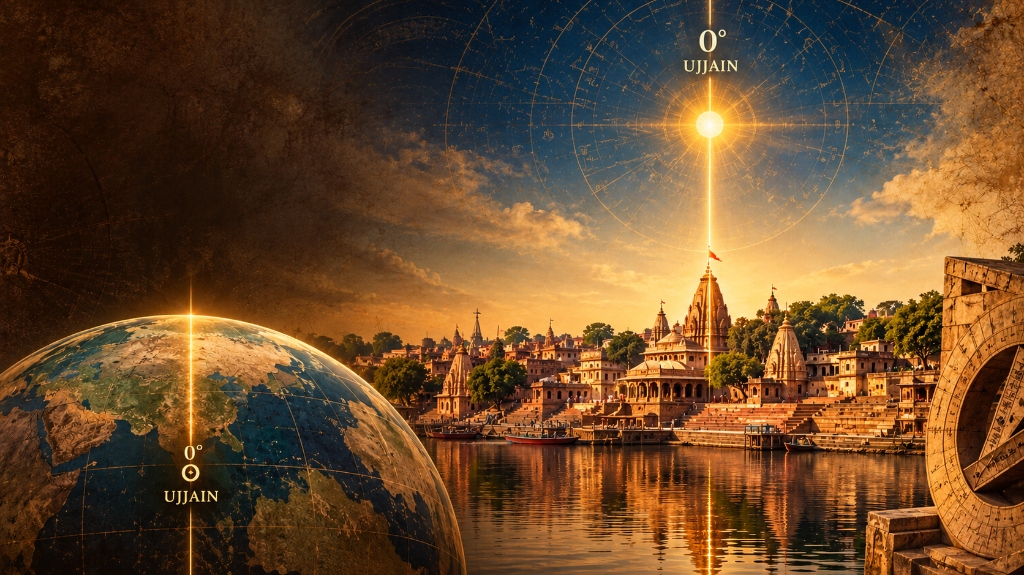
सन् १८८४ के अंतर्राष्ट्रीय मेरिडियन सम्मेलन में राजनीतिक प्रभाव के आधार पर लंदन के ग्रीनविच को शून्य देशांतर चुने जाने से सहस्त्रों वर्ष पूर्व, भारतीय आचार्यों ने यह सिद्ध किया था कि प्रधान मध्याह्न रेखा और उज्जैन की ऐतिहासिक धरोहर किसी साम्राज्य की सीमा नहीं, अपितु एक ब्रह्मांडीय ज्यामितीय सत्य होनी चाहिए। सूर्य सिद्धान्त के अनुसार लंका से सुमेरु पर्वत को मिलाने वाला यह ब्रह्मांडीय रेखादेश ठीक अवंतिका के ऊपर से होकर गुजरता है।
Long before maritime empires voted at the 1884 International Meridian Conference to fix the prime meridian at Greenwich, classical Indian horology recognized a cosmic principle: zero longitude should not be an arbitrary imperial line. As chronicled in the astronomical heritage of Ujjain, as established in the classical plumb line of Rekha-desha traversing straight above Avanti.
राक्षसालये देवतानां च मध्ये यत् समसूत्रम्। तदवन्तीमुपरि गतं रेखादेश इति स्मृतः॥
That true plumb line which passes midway between the realm of Lanka and the celestial summit, traversing straight above Avanti (Ujjain), is proclaimed the baseline meridian of the earth. — Surya Siddhanta
Intersection with the Tropic of Cancer
कर्क रेखा का खगोलीय संपात
उज्जैन लगभग २३.१८° उत्तरी अक्षांश पर स्थित है — जहां से कर्क रेखा मध्य भारत को पार करती है। ग्रीष्म संक्रांति (Summer Solstice) के दिन दोपहर का सूर्य ठीक शीर्ष बिंदु (Zenith) पर होता है, जिससे सीधी खड़ी छड़ की परछाई शून्य हो जाती है। यह अद्वितीय खगोलीय स्थिति विश्व के किसी अन्य ऐतिहासिक नगर में नहीं मिलती।
Ujjain sits at approximately 23.18° North latitude — precisely where the Tropic of Cancer traverses Central India. On the summer solstice, the midday sun reaches its absolute zenith (90° overhead), casting zero shadow from vertical gnomons. No other ancient capital combined this solstice alignment with direct transit geometry across the subcontinent.
From Varahamihira to Jai Singh II
वराहमिहिर से सवाई जयसिंह तक की परंपरा
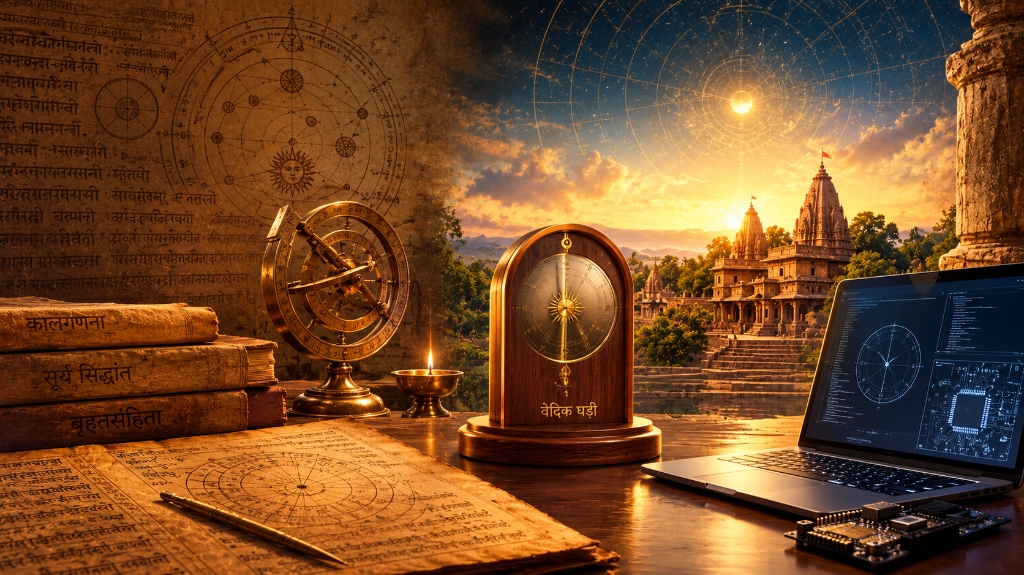
छठी शताब्दी में वराहमिहिर ने उज्जैन में पंचसिद्धान्तिका की रचना की। सहस्र वर्ष पश्चात महाराजा सवाई जयसिंह द्वितीय ने उज्जैन में विशाल जंतर-मंतर वेधशाला का निर्माण कराया, ताकि सदियों के अयनांश विचलन एवं पंचांग गणनाओं को पुनः शुद्ध किया जा सके। यही काल-मानक आज हमारी वैदिक घड़ियों के संग्रह का मूल आधार है।
In the 6th century, royal astronomer Varahamihira composed the Pancha-Siddhantika in Ujjain. A millennium later, Maharaja Sawai Jai Singh II erected the grand stone observatory (Vedh Shala) in Ujjain to recalibrate planetary tables against centuries of ayanamsha drift in the Panchang. Today, this exact meridian geometry powers our heirloom horological timepieces.